In August 2024 I gave the keynote at a client's data science conference. The brief was to talk about innovation but keep it pragmatic. There's always a lot of noise in this space, and they wanted a topic that was a no-regret bet, something that was early but where there was clearly something there.
I chose AI agents.
My second slide was about the name. Agents get it from agency, the ability to make decisions independently. At the time a lot of builders were experimenting with tools like AutoGPT, which could chain tasks together. What made agents different was a loop: perceive, reason, decide, act.
That was the first time I stopped thinking of agents as just another tool. We'd had automation for decades, and it was predictable by design. We'd had models that could reason, but they waited to be asked. Something that is both non-deterministic and autonomous is new, and I don't think we've had anything quite like it in the enterprise before.
From suggesting to acting
Not long after that keynote, we started building. It began in a sandbox as agentic RAG, an agent that could find and reason over a company's own information, and it grew from there.
The moment it clicked was with a quick-service restaurant business. Their teams were making decisions about buying more sustainably, and like most teams they leaned on experience more than data. The agent let a team member simulate the different options and see how each would play out. Then the person made the final call, and that was all the agent did. What won them over wasn't anything clever in the technology. It was that the agent helped them get to a better outcome while they stayed in charge of the decision, and in business, outcomes are what people care about.
The next step was agents that act. With a B2B client, we'd built a sales propensity model, the kind most companies have, that scores which customers are likely to buy. With agents, the model stopped being something a person ran and then interpreted. The agents ran it, identified the likely customers, ranked them, worked out each customer's preferred channel, and sent the outreach directly.
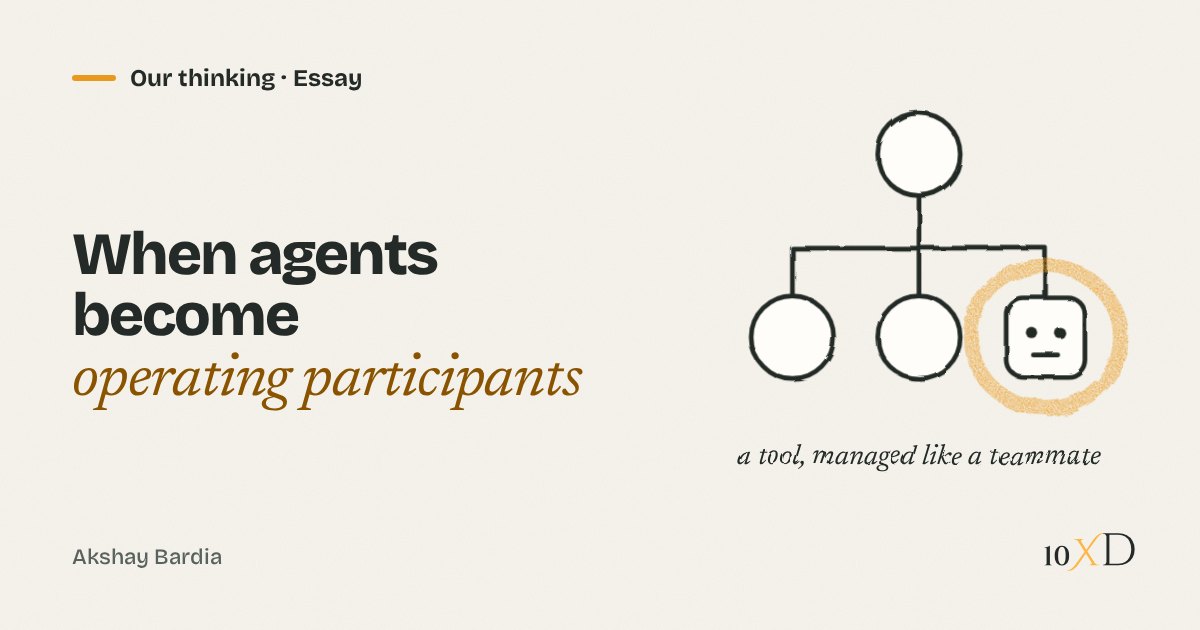
That's high-value, high-risk work. An agent sending a note to a customer is speaking for the whole business, the way a senior salesperson does. And that's the point at which an agent stops being an assistant and becomes an operating participant: it's doing part of the job, in front of customers, on the company's behalf.
Tool or colleague?
I'll admit I've gone back and forth on this. Back then, it felt like I was meeting a new kind of colleague: one doing real work alongside you, and arguably faster and more accurate, and at times thinking things through more carefully than you would.
Two years on, with all the doom in the headlines, I'd say clearly that agents are tools. They don't own anything or carry the consequences of what they do, and they have no stake in how things turn out.
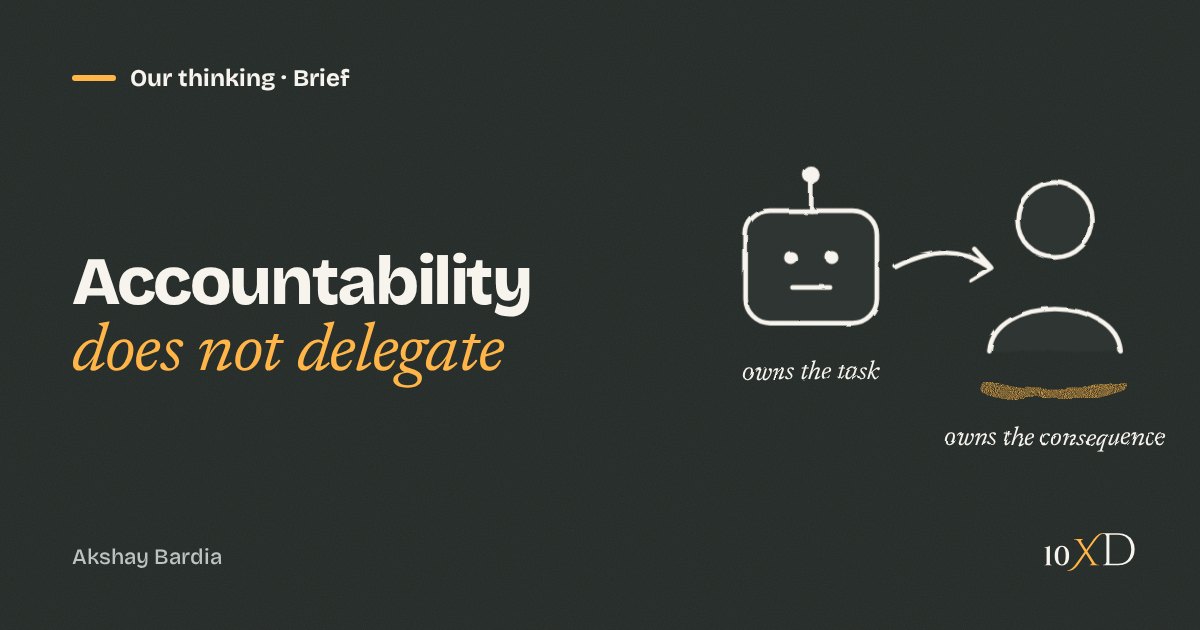
But I don't think the two views contradict each other. An agent is a tool in what it is. You still have to organise it like a team member that you manage: give it a defined job, decide what it's allowed to do on its own, make sure someone supervises it, and make sure a named person answers for what it does. That last part is big enough that I wrote a separate piece on it: Accountability does not delegate.
Align the agent to the person
Once software is placing orders, setting prices or writing to customers, the organisation has to change around it. This is the part that tends to be underestimated, because it isn't only a technology decision. Once the work changes, what people do changes with it, and so do the tools they use. I think of it as three things moving together: the work, the workforce and the workbench. I'll go deeper on that in a later piece.
The question I'd start with is how people will feel about a digital colleague. If agents arrive looking like the competition, people will find ways not to use them, and frankly I'd understand why.
In the sales example, we didn't set the agents up as an alternative to the sales team. We attached an agent to each salesperson. That lined up neatly with what the salespeople were already measured on: working out which customers were most likely to buy, which channel to use, and what message would land. The agent helped each person hit their own numbers. When you align agents to individual incentives like that, adoption goes up faster than anything I've seen.
The quick-service restaurant business did something similar. Agents came in as extra help for each team member. Behind the scenes it was a multi-agent system, with several agents coordinating, but on the surface it was simple. Every agent had a clear owner, and its delegated authority was spelled out: what it could do alone and what needed a person. Managing those agents became part of people's jobs.
At least in the short term, I think that's where most of the benefit is: individuals using agents to get much more done, rather than agents taking over roles.
What companies tend to get wrong
One mistake is expecting it to happen overnight. Anyone promising a transformation in a quarter, good luck to them.
Another is underestimating what it means for people. In most of the leadership teams I've worked with, the CHRO is the one who really thinks about it, and it can't sit with one executive. The people whose work is changing are the ones who decide whether any of this sticks.
Companies also fall into the productivity and cost-out trap, mostly because it's easy to measure. Hours saved fit neatly on a slide. Growth is harder to attribute, so it gets less attention than it deserves.
And many bring old assumptions from earlier waves. There are parallels with digital transformation and with the rise of data science, and I've lived through both. But nobody has seen this before. Agents can act, and that changes the questions you have to answer, from who is allowed to approve what, to how a team is organised.
The result is usually the same. Programs take longer than planned, executives conclude the technology isn't ready, and enthusiasm fades just as the organisation is starting to learn.
The fourth step
On that second slide back in 2024, the loop was perceive, reason, decide, act. We'd seen versions of the first three before. Analytics perceives, models reason and decision-support tools recommend. It's the fourth step that changes how a company has to work, because the moment software acts, it's doing part of someone's job, in front of customers, on the company's behalf.
So when leaders ask me whether agents are ready, I usually turn the question around and ask whether the organisation is ready to work with them. Has each agent got a defined job? Has someone decided what it can do alone? Is there a person managing it, and a named person who answers for what it does?
Written by Akshay Bardia, with AI help for research, drafting and editing. The views and experience are his.